Tuesday, March 30, 2010

Our Lord of the Earthquakes, and Kindergarten

Matthew and I took a trip to Cusco yesterday to participate in some pre-Easter festivities, to run some errands, and drink coffee. Although we had heard about the Temblores procession, we had no idea what we were getting into. Since 1650, the people of Cusco have had a procession of Nuestro SeƱor de los Temblores (Our Lord of the Earthquakes), the Monday before Easter. The tradition began by inhabitants of Cusco parading around the plaza with a gigantic crucifix praying for an earthquake to stop. It miraculously did, and the tradition continued yesterday with the same crucifix.

We arrived near the main square around 3 and although we could tell people were getting ready for something big, nothing was happening yet. Balloons and red cloth decorating the balconies in the plaza, police for keeping the peace (I assume...), people walking around, but nothing major. When it finally seemed like people were flocking and ready for something, we found a place to stand and began guarding our space...people were serious about this procession, and making some money too. There were people everywhere selling flower petals (for throwing), palms in the shapes of crosses, ice cream, cotton candy, and lots of other snacks. It was like a parade in the US...except completely religious. People who were in the procession lined up in the street with banners and waited. And we waited and waited and waited. I think we stood for over an hour without anything really happening. Finally, we could see the giant crucifix wobbling down the street, moving inch by inch, poco a poco. After forever, it was finally in front of us and we could see why it took so long-it must weigh a million pounds and was carried by special red-cloaked men who kept passing off their responsibility to other special red-cloaked men.

Flower petals flew, people cried, there was a marching band, I thought I was going to be crushed to death...all for this slow, crazy procession. I´m really glad we went, although we realized when we got back to Oropesa last night that something similar happened here in the streets, too. But we made it back to the beautiful city of Cusco and were part of a very old tradition. I´m glad we went, but I´m glad we can breathe again! (The photo of us is meant to demonstrate how tightly packed we were in the crowd, but I don´t think it accurately shows how bad it was.)
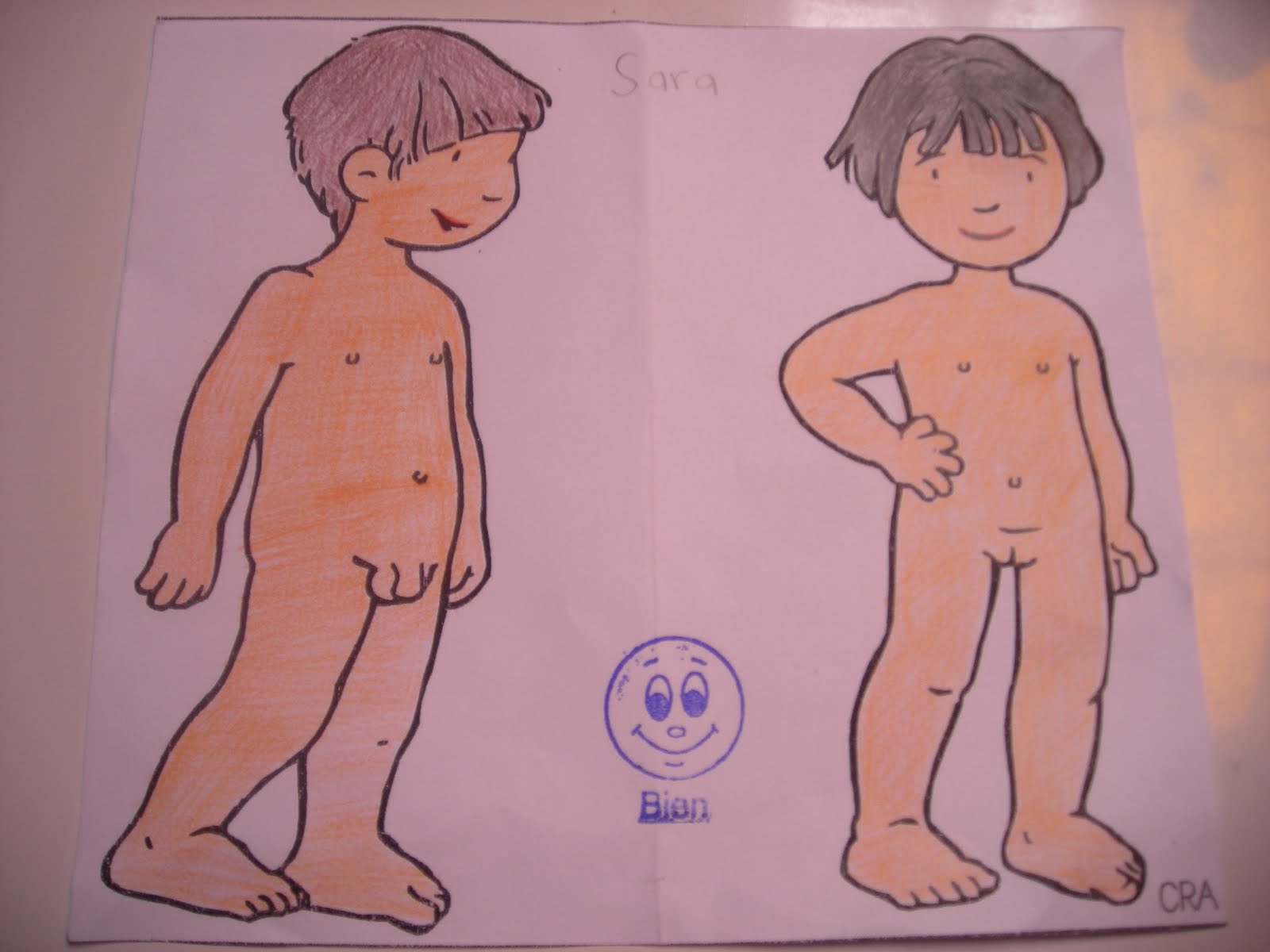
And finally, here´s what I made in school today. (Did YOU know that boys and girls are different? Actually, I don´t think we learned this stuff until 5th grade, and I KNOW there wern´t any clever little coloring sheets...) I got my own sheet to color and many of the children were distressed when I began coloring the boy´s hair brown, not black. I explained that we´re all different, right? They were also worried that I didn´t have a notebook to glue my picture in and made sure to hand it to the teacher so I could also get a "bien" stamp. One girl was kind enough to show me where to write my name. Que lindo.

Saturday, March 27, 2010

Oropesa

Guess what everyone!? I am sick again. Argh! The flu this time I think. But I got some medicine, not sure what it does since medicine comes in only the pill case without the information. The good news is I am really excited right now because I just agreed to do a 4 day hike to Machu Picchu, on the jungle path!! (If only I had my camera)

Ok Oropesa!
We are here! Oropesa is going to be a huge growing experience for me. It is a small town of just 4000 people and only 2 white people (Gringos (guess who?)) Never have I been the minority, I mean there have been times when I have been a minority, but only temporarily. Gringos so rarely come here that when Sara and I walk around the town, we gather a parade that follows us around. And if we sit down to have some juice at the local bakery, at least 10 kids will be sitting outside watching us, their favorite prase being "Como se dice (word) en ingles?" (how do you say, (--) in English) For example, "Como se dice mono en ingles?" I respond "monkey," then everyone laughs, and we start the cycle over again.  I might start offering to have my picture taken and charge a sol.

A positive thing is everywhere we go in town we see students from school who instantly hollar "hello teacher" and "bye-bye teacher!" Teaching at the school here is a bit intimidating. 1.) Its all in Spanish, and right now my spanish still sucks when 20 kids are talking to me. 2.) I am a white giant.

So far this is how a school day goes... We arrive at 10am and walk to the director´s office to say we are here and to see which class is in the most need today (sometimes classes do not have teachers and we fill in) while we are waiting, every child who glimpsed our being will run to us, grab our arms to see if we are real, then ask if we will play. This will cause a noise and the few kids who are still in their classrooms will peek outside, see us as a still target and come running for us. Then the new-comers will grab our arms and ask us to play, teach them English or teach an art class. Somehow Roxana, the director and our housemate, says some magic words and the kids go back to their classrooms and Sara and I go to our assigned classes. The kids here are extreamly energetic and, at times violent. Anywhere from kicking and punching one another to using a slingshot to fire fruit peels at each other. This is all fine with me because the kids here are also very tough, but my problem is I do not know the words to discipline them. Little by little (poco a poco). I have also been asked to help design some murals for the school. Now some photos!


A chicken on the roof of our house in Oropesa.
Sara reading to her new friends

Thursday, March 25, 2010

Itinerary? ha. But we´re here!


This is what the bread looks like when we go to buy it. Designs done by hand. So sweet and delicious, great with butter or just plain like it is. Snuck a photo last night when the guy went to find a bag!

Hello from Oropesa!
One thing I (Sara) have learned throughout the past two months is that very few things we have tried to plan go as planned. My parents wanted a detailed itinerary before we left, with dates and addresses and phone numbers of all our stops. I did my best to detail our 4+ month journey; however we followed the itinerary for about 3 days. I am pretty sure that for the first two weeks, we didn´t pass a day without something “bad” happening- from only receiving 60 days to be in the country, to a bus strike that set us back on our trip to Cusco, to horrible weather that prevented us from actually getting to Cusco once the busses were finally running, to getting our feet run over by a taxi… it was a tough beginning. But here we are, finally in Oropesa, one of our first planned stops.
Although things have turned out so much differently than I thought they´d be, I´m really glad that I´ve had to learn to be flexible. I like that we could arrive in Puno, knowing that we were heading to Cusco next, but not necessarily having a specific date of departure or anything. Just generalizations. Don´t get me wrong, I´m still the same control-freak, just toned down a bit. And things usually work out in a way that makes me happy. We didn´t make any calls or reservations for hostels in Cusco before arrival and I was really disappointed that many of the places were much more expensive or full when I called after grabbing our stuff from the bus. Once we finally found one that was alright, we ended up checking out after only one night because it was too expensive and just felt uncomfortable. We ended up going to a youth hostel and over 6 days met lots of great people from all over the world, and celebrated our last night in Cusco with some of them.
I would not describe Matthew and me as “club people.” Bars are not my favorite place, I don´t really like to dance in front of strangers, drinks are expensive…etc, etc, etc. Matthew and I were heading out to get some juice around 9 and and got talked into going to a salsa bar (good job, Paria). We took some free salsa lessons and headed next door to another bar for dancing. I was so surprised by how much fun I had. We danced until about 1, I think. It´s so much easier for me to chicken out and stay inside watching a movie, where I´m comfortable, where I feel safe. I´m really glad we went out, even though my legs were killing me yesterday.
So, finally, back to OROPESA (sorry no info in English, just a map). We´re living here in a lovely town known for it´s bread. We visited Monday and Tuesday, going to the school to figure out what we´re doing and have started volunteering. Lugged all our stuff here from Cusco (about ½ hour by taxi, 1 hour by bus) and moved in yesterday. I said I´d like to be with the younger children, so Tuesday I was learning my shapes (“figures geometricas”) with them.  Matthew is with the 5th and 6th graders. Right now, we´re just assisting in the classrooms as we are able and I´m not sure how our roles here will evolve. Maybe we´ll eventually be teaching English lessons, but I´m not sure. Beginnings are always hard for me, but once we get used to the schedule and the kids stop treating us like zoo animals, I think it will be great. And in case you´re wondering, the "plan" is to be here until the end of May/beginning of June.

(photo added April 3)

Tuesday, March 23, 2010

Sexy Woman

Ahh Sacsayhuaman, a splended sight in the night time.

Yesterday Sara and I went for a walk and ended at the Inca ruin, Sacsayhuaman, and lucky for us it´s free after 6pm! Our presence on the ruin attracted a guide in just seconds, and before a snap of a finger we were learning the history or the Incans. The Incans are some clever people, within their stone work they incorporated the images of a llama, a snake, a hummingbird, a fish and a guinea pig. They built the temple using limestone, which had to be transported from another mountain side. 20,000 people worked the earth for 77 years using a metorites (space rocks) to cut and smooth the stone. There is no longer any spacerock to be found in the area supposedly because all the spiritual people (shamans) took them. The stones were cut, then ramps were built out of earth and bamboo to slide the stones into place. Clay slip, along with cactus juice, was used to assist in sliding the stones into place.

During our hike we met a woman from Queensland, Australia. I mentioned that the U.S. now has some sort of healthcare, and she was shocked. She informed us that she has a job working in a grocery store and makes $18 an hour (about $16 US) and gets paid vacation. She said if someone is ever sick in Australia, all they need to do is visit the hospital and everything is taken care of. This is one of many similar stories we have heard about Australia. Several people speak of the US in shock that it is so called the "wealthiest" nation, yet basic human needs are not being met. In my eyes it seems the US rose to power, though they were the best nation ever, then failed to evolve.

Another great bus ride story:
We were packed onto this bus on our way to Oropesa with not even a centimeter of wiggle room. I felt what I thought might be a hand in my pocket. The bus stopped and this old man gets off and my wallet is gone, I jumped off the bus and chased ofter the old man (he was not very fast) and he gave me my wallet back and I wiggled my way back onto the clown wagon.

Friday, March 19, 2010

Little Catholic Surprises

Inca King near the fountain, truck transporting glass casket,
"event coordinators" in green directing people , costumed kids


Our favorites! These kids waited patiently in the alley near us
until it was their turn to dance in front of the entire group. They were good!

It´s been exactly two months since landing in Lima. Since we´ve arrived, it´s been easy to spot the distinct¨"Catholic-ness" of the country, although in some ways (Matthew mentioned somethign about this in his coca post) it´s a form of Catholicism that seems specific to Peru, with a unique combination of Catholicism and the ancient cultures of the country.

Yesterday, as Matthew and I were exiting a museum about Inca history, there was all sorts of commotion in the Plaza de Armas (the main square). I asked a security guard from the museum what was going on and his response was simply "Los Incas" ... like duh, we should have known! But that explanation didn´t mean much. We approached the crowds of people throwing flower petals, men dressed up as Incas marching around, and a truck driving around the square. We figured it was for the arrival of famous Don Bosco, which had been advertised on large banners.

It wasn´t until we returned to our hostel yesterday afternoon and talked to other travelers that we understood better what was going on. From my own observations, I thought it was some grand celebration to welcome Don Bosco to Cusco, with people dressed as Incas to represent some sort of reconciliation between the Incas and the Catholic Church/Spaniards. There were people dressed up in various cultural costumes, and they danced around. It was all very impressive. We watched the truck drive around and realized it was carrying a glass casket, with what I thought was a statue. The truck drove up to the church and people unloaded the casket and presented it to the Plaza and everyone who was watching, and encouraged everyone to clap. I just thought the church was getting a new statue, as many of the churches have glass caskets containing statues of Jesus. And I thought it was a man in a poncho who spoke briefly standing next to the man dressed as an Incan King who was Don Bosco. I was wrong.

In reality, it was a celebration to welcome the relics of Don Bosco to Cusco. It was really the body of Don Bosco, who died in 1888, who was paraded through the streets. Apparently, he´s making the rounds in Peru, and is eventually even heading to the States. We saw signs advertising his upcoming arrival in Puno when we were there, although I was still trying to find out why this priest was so important. I don´t understand all the details of the presentation from yesterday, what all the costumes represented, or why there was a combination of Inca and Catholic things. Lots of people were interested though. Not least of all me.

As a bonus, Matthew and I were trying to find the Convent of Santa Clara today, where there is a church full of mirrors. The mirrors were apparently used to entice indigenous folks into the church. As soon as we arrived, we saw this amazing sight coming out of the church.
Not sure what it was or why...but there was even a band. Eventually, the men succeeded in lighting the big strip of firecrackers that went off for a solid five minutes. Then, they proceeded down the street, struggling with the giant statue, which looked as if it was marching itself down the street. Lovely!

a thing or two about coca


The coca leaf is no more white cocain than grapes are wine.

All you need to know about Coca

There are several types of coca rees but only 4 contain the alkalai cocain. The trees usually grow to 6 meters but are trimmed t only grow to 2 meters for producing the best leaves. An average tree has a producing age of 26 years and matures after 4 years. Signs of chewing coca has been around since 20,000BC, but only in its current form since 3000BC. Scientific conrolled studies have proven that coca (not cocain) can cure over 50 ailments, respitory, muscular, digestive, sexual, and cadiovascular systems are all affected by coca. Coca is used in religous practices much like bread and wine is used in the catholicism.

There is an argument that the Catholic Kings are the first drug trafficers because they forced the incans to build the cathedrals (as slaves) and encouraged them to chew coca (even though the Spanish King made chewing coca illegal) because it allowed the incan slaves to work harder and longer. These Incan slaves were building Catholic fortresses on the foundations of their own sacred temples. They hated the Spanish, and in a silent non-violent retaliation the Incan slaves carved numerous images of the coca leaf, serpents, pumas and condors in the stonework of the cathedrals. It seems in nearly every city in Peru there is a cathedral that was built by incan slaves on the foundations of formal temples. Nearly everytime there is a large earthquake here the churches crumble while the incan stones and foundations remain in place.

Everywhere Catholic oppression is visible. Only people who are free of sin are allowed to take communion in the churchs, for example, a man and women live together and have children, but are not married because a marriage here is expensive (and the marriage must be lavish to show your place in society, so the punishment for being poor is no body of christ for you. It really irks me seeing this beautiful landscape with a peaple that have a firm connection with the earth, being forced into catholic culture. (they were forced, from scalping to smoke and mirrors) What I don´t understand is why do people need to look to the sky for the heavens above, when there is a a heaven so big there is no need to look up? (from Josh Ritter)

A fun fact about Coca-Cola
In the late 1800´s a chemist from Georgia invented a drink called "French Wine" using the coca leaf(not cocain but containing the alkali). Then prohibition hit the US and he changed his formula from an alcholic beverage to include Coca(after the cocain was extracted) African cola nuts and caffeine. He then renamed the drink Coca-Cola.

Some images of Mother Earth, between Puno and Cusco.

A mountain pass 4319M high (from where I took the picture) I do not know how high the mountain top is (yes thats a glacier!)

Thursday, March 18, 2010

Marriage and Altitude Sickness

With my first gasping breath in Puno, Peru my Grandfather took his last breath in Decatur, Illinois. Rest in Peace.


Altitude sickness really sucks. If was so bad that I would wake up in the middle of the night, walk to the bathroom and have to take a minute to catch my breath. Sara and I choose to take a bus straight from the coast to Puno (a climb of 3,820m). The symptoms of altitude sickness include, headaches, nausea, vomiting, dizziness, insomia, loss of appitite, fluid in the lungs, and swelling of the brain. I had 5 of the aformentioned symptoms, you can guess which ones. Of couse at the time I had no idea these were symptoms because we had not yet read that part of our Lonely Planet tour book. We left for the islands of Lake Titikaka at 7am and I was feeling like hell but did not want to miss the chance of exploring the islands with our newly made friends. (read about the Uros Islands below).

The Taquile island is a 7sq km chunk of land 35km from the shore of Puno. About 4,000 people live on the island. It also seems that every sub-Peruvian culture wears a different hat with a different meaning. On Taquile the men wear red or red and white hats, which they each knit themselves. The hats are half-white and half-red striped (meaning single) or all red striped (meaning married). The tricky part about these hats is that if the men descide to marry, they must present their knited hats to the father of their hopeful bride. The father will then pour water into the hat and if the hat leaks, the man is deemed not good enough, but he can make another hat and return in 6 months and hope his kniting has improved. So...Andy...I have been learning to knit and I am pretty good...I have a hat to show you...Also, Sara has been growing her hair out, which is good because before marriage on Taquile the women grow their hair out and then chop it off and make a wig for their husband to wear under their approved hats.

Taquile island truely is a fairytale paradise (except for the hours of 10-2 when they are stompped on by wandering tourist) unaffected by the Conquering Catholics. I am thankful I was allowed to tread on their paradise, if only for a glimpse of life unaffected by the mainland chaos. Also, because of the altitude, I was no stomping, but treading very lightly (and slowly).

Actually the hat I have to show was made by a man from the island and is not a marriage hat, but a typical cold weather hat called a Chullo, and Sara is growing out her hair, but just to have long hair. So no worries.